How many ivf cycle does it take to get pregnant
IVF treatment brings hope to many couples facing difficulty in conceiving.
One of the most common questions patients ask is how many IVF cycles are needed to achieve pregnancy.
The answer depends on multiple medical and personal factors. Some conceive early, while others need repeated attempts and treatment adjustments.
This blog explains IVF cycle expectations, success patterns, reasons for variation, and how treatment planning works in real clinical practice. You will also understand how Infertility Treatment is planned step by step and what influences outcomes in each cycle.
Understanding IVF cycle and its purpose
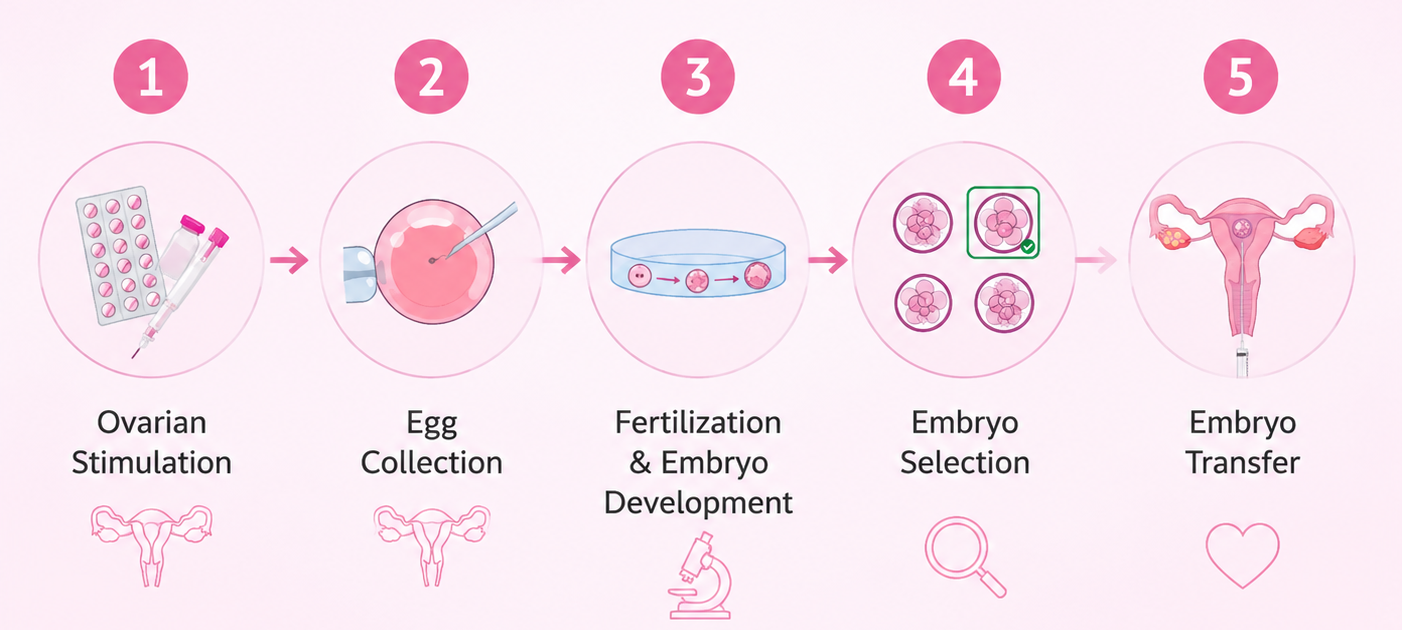
An IVF cycle is a complete treatment process that helps fertilisation outside the body and embryo transfer into the uterus.
Each cycle includes:
- Ovarian stimulation to produce multiple eggs
- Egg collection from ovaries
- Fertilisation in the laboratory
- Embryo development and selection
- Embryo transfer into the uterus
One cycle usually takes 3 to 6 weeks depending on response and protocol.
For many patients undergoing Infertility Treatment, the first cycle also helps doctors understand how the body responds to medication and stimulation.
How many IVF cycles are usually needed
There is no fixed number that applies to everyone.
In general clinical practice:
- Some patients conceive in the first cycle
- Many require 2 to 3 cycles
- Some may need 4 or more cycles depending on complexity
Success improves over multiple attempts because treatment is adjusted after each cycle.
This is why doctors often evaluate results after every attempt and refine the approach.
For couples seeking Infertility Treatment, patience and step-by-step planning play a major role in achieving pregnancy.
Factors that influence IVF cycle success
Several medical and lifestyle factors decide how many cycles may be needed.
Age factor
Age directly affects egg quality and response to stimulation. Younger patients usually respond better to treatment cycles.
Ovarian reserve
Low egg reserve may reduce the number of eggs retrieved, affecting embryo formation.
Sperm quality
Healthy sperm improves fertilisation and embryo development rates.
Uterine condition
A receptive uterus is essential for implantation. Issues like fibroids or thin lining may reduce success chances.
Underlying infertility cause
Conditions like PCOS, endometriosis, or tubal blockage influence cycle outcomes.
Lifestyle habits
Smoking, alcohol use, stress, and poor sleep can affect hormonal balance and treatment response.
In clinics offering Infertility Treatment, these factors are evaluated before and during each IVF cycle to improve planning.
What happens when IVF cycle fails
A failed IVF cycle does not mean permanent infertility. It often provides important clinical data.
Doctors usually assess:
- Egg quality and number retrieved
- Embryo grading and development
- Fertilisation rate
- Endometrial thickness
Based on this evaluation, changes are made in the next cycle such as:
- Adjusting medication dosage
- Changing stimulation protocol
- Improving embryo selection methods
- Optimising transfer timing
At clinics like Fertility Specialist Ravet, Pune, such cycle analysis helps improve success rates in the next attempt.
Many couples conceive in the second or third cycle after protocol modification.
Success rate across IVF cycles
IVF success improves cumulatively over repeated cycles.
Average trend observed in fertility practice:
- First cycle: 30 to 40 percent chance
- Second cycle: additional improvement based on adjustments
- Third cycle: cumulative success can reach 60 to 70 percent in suitable cases
These numbers vary depending on age and diagnosis.
Doctors use cumulative data rather than single-cycle results to guide expectations during Infertility Treatment.
Role of personalised fertility care
Every patient responds differently to IVF.
This is why personalised treatment planning is important.
In many cases, Fertility Specialist Ravet, Pune doctors focus on:
- Custom stimulation protocols
- Embryo quality improvement
- Timing of embryo transfer
- Hormonal balance correction
Personalised care increases the chances of success across multiple IVF cycles rather than depending on a single attempt.
How Dr. Chaitali Adkar approaches IVF cycles
In clinical practice, doctors like Dr. Chaitali Adkar focus on step-by-step cycle evaluation rather than repeating the same protocol.
Key approach areas include:
- Detailed fertility assessment before IVF
- Monitoring response during stimulation
- Adjusting medications based on cycle outcome
- Improving implantation conditions in next attempt
This structured approach is common in advanced Infertility Treatment planning and helps improve outcomes over repeated cycles.
Emotional journey during IVF cycles
IVF is not only a medical process. It also affects emotional well-being.
Many couples feel hope at the start of each cycle and anxiety during the waiting phase.
After a failed cycle, disappointment is common. However, understanding that IVF often requires multiple attempts helps reduce emotional pressure.
Support systems, counselling, and clear communication with the Fertility Specialist Ravet, Pune team can help couples stay consistent through treatment.
FAQs
Most couples require 2 to 3 cycles. Some conceive earlier, while others need more cycles depending on medical conditions.
Yes, pregnancy can happen in one cycle, but it is not guaranteed for every patient undergoing Infertility Treatment.
Failure may occur due to embryo quality, uterine receptivity, hormonal imbalance, or implantation issues.
Yes, success often improves after each cycle due to better understanding and treatment adjustments.
Usually one menstrual cycle is recommended before starting the next attempt.
Yes, maintaining healthy weight, reducing stress, and avoiding smoking can support better outcomes.
If pregnancy does not occur after 12 months of trying, consulting a Fertility Specialist Ravet, Pune is recommended.
IVF success depends on multiple factors and rarely happens in a single attempt for everyone. Some couples achieve pregnancy in the first cycle, while others need repeated cycles with treatment adjustments.
Understanding your body response and following structured Infertility Treatment planning helps improve outcomes over time.
With expert guidance from specialists like Dr. Chaitali Adkar, each IVF cycle becomes a step closer to pregnancy rather than a standalone attempt.