What Is Ovarian Dermoid Cyst and How Is It Treated?
Introduction
An ovarian dermoid cyst is a common ovarian condition seen in women, especially during reproductive age. Many women discover it accidentally during a routine ultrasound done for unrelated symptoms. It often grows slowly and stays silent for years.
Understanding this condition matters because early detection helps prevent complications like pain, torsion, or fertility issues. Many patients confuse it with other ovarian cysts, which delays proper care.
This blog explains what an ovarian dermoid cyst is, why it forms, how it is diagnosed, and the treatment options available. You will also understand when medical attention becomes necessary and how specialized care like Gynecology Services supports treatment decisions.
What Is an Ovarian Dermoid Cyst?
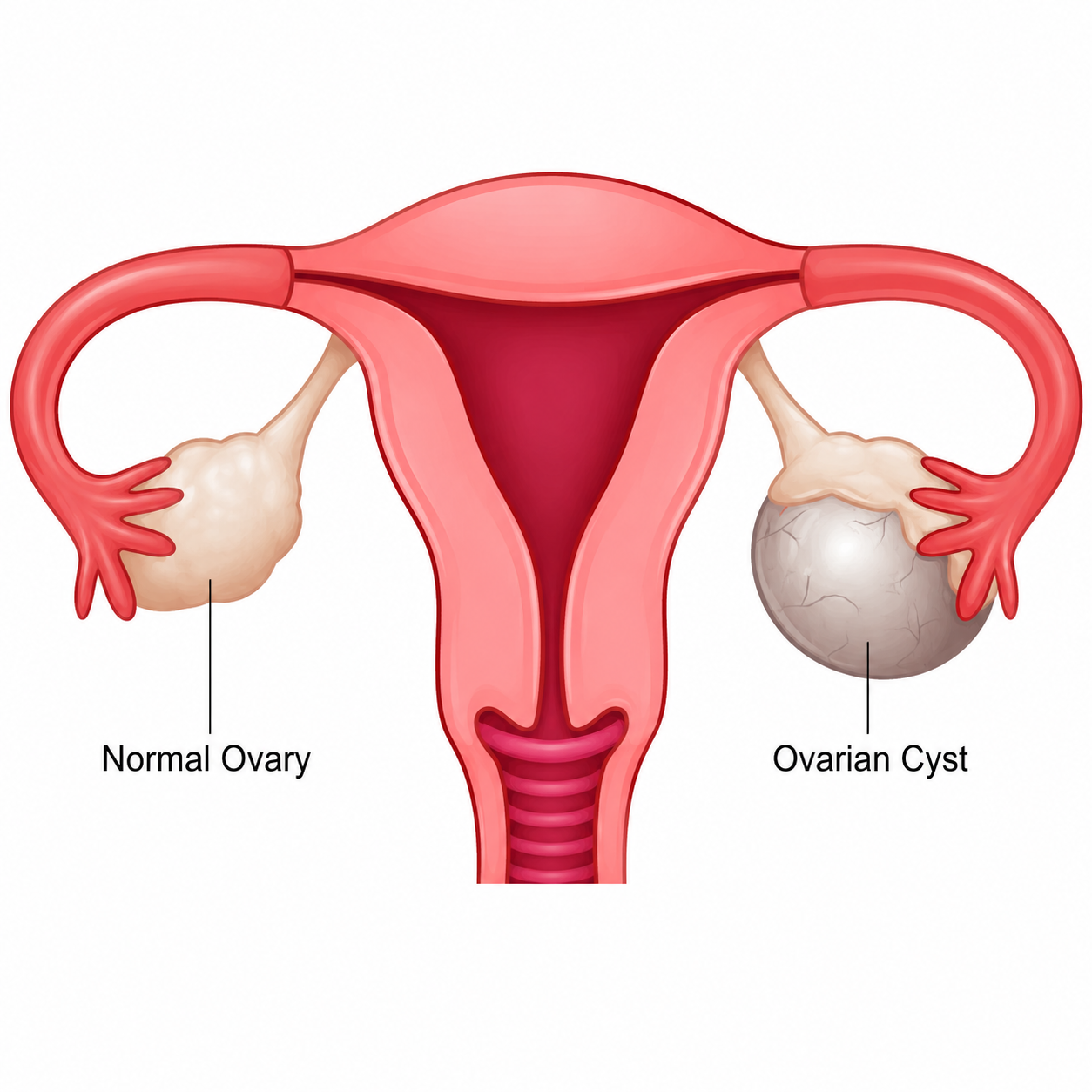
An ovarian dermoid cyst is a benign growth that develops from germ cells in the ovary. These cells have the ability to form different tissues, which is why the cyst may contain hair, fat, skin, or even bone-like material.
It is also called a mature cystic teratoma. Most cases are non-cancerous, but evaluation is important to confirm the diagnosis.
Many women first hear about this condition after a scan, not because of symptoms. It often appears during a pelvic ultrasound or routine health check-up.
In clinical practice, Gynecology Services play a key role in identifying and managing these cysts early. Proper assessment ensures the cyst is monitored or treated based on its size and behavior.
Why Does an Ovarian Dermoid Cyst Develop?
The cyst forms due to abnormal development of germ cells before birth. These cells remain inactive for years and later grow into a cyst containing different tissue types.
It is not linked to:
- Diet
- Stress
- Infections
- Lifestyle habits
Key points to understand:
- It can develop in one or both ovaries
- It grows slowly over time
- It is most common in women between 20 and 40 years
Some patients ask whether it can be prevented. The answer is no. Regular gynecological check-ups remain the only practical way to detect it early.
In places like Ravet, access to a Gynecologist in Ravet or experienced specialists such as Dr. Chaitali Adkar helps in early diagnosis and follow-up care.
Symptoms You Should Not Ignore
Many ovarian dermoid cysts do not cause symptoms. When symptoms appear, they depend on size and pressure on nearby organs.
Common symptoms include:
- Lower abdominal discomfort
- Pelvic heaviness
- Bloating or fullness
- Frequent urination
- Pain during movement or intercourse
A serious symptom is sudden severe abdominal pain. This may indicate ovarian torsion, where the cyst twists the ovary and cuts blood supply. This condition needs urgent care.
Patients often delay evaluation thinking it is normal menstrual pain. This delay can increase complications.
Gynecology Services are designed to assess such symptoms early and prevent progression.
How Is Ovarian Dermoid Cyst Diagnosed?
Diagnosis is usually straightforward with imaging tests.
1. Ultrasound Scan
This is the first and most important test. It helps identify:
- Mixed tissue inside the cyst
- Fat or calcified material
- Size and location
2. MRI or CT Scan
Used when ultrasound findings need confirmation. It provides a clearer view of tissue composition.
3. Physical Examination
A gynecologist may feel a pelvic mass during examination.
4. Blood Tests
These help rule out other ovarian conditions.
In clinical settings, Gynecology Services ensure all these steps are coordinated for accurate diagnosis and treatment planning.
For patients in Pune and surrounding areas, consulting a Gynecologist in Ravet or specialists like Dr. Chaitali Adkar ensures structured evaluation and clarity about next steps.
Treatment Options for Ovarian Dermoid Cyst
Treatment depends on cyst size, symptoms, and risk of complications.
Observation and Monitoring
If the cyst is small and not causing symptoms, doctors may suggest regular monitoring.
This includes:
- Periodic ultrasound scans
- Symptom tracking
- Size comparison over time
This approach avoids unnecessary surgery when the cyst is stable.
Laparoscopic Surgery
This is the most common treatment method.
A small incision is made in the abdomen, and the cyst is removed using a camera-guided system.
Benefits:
- Minimal pain after surgery
- Faster recovery
- Small scars
- Short hospital stay
The goal is to remove the cyst while preserving ovarian tissue, especially in women planning pregnancy.
Gynecology Services often prefer this method when conditions are suitable.
Open Surgery
Open surgery is required when:
- The cyst is very large
- There is suspicion of rupture
- Laparoscopy is not safe
Recovery takes longer, but it ensures complete removal in complex cases.
Emergency Treatment
If ovarian torsion occurs, emergency surgery is required immediately. Delayed treatment may damage the ovary.
This is why sudden severe pain should never be ignored.
Role of Specialized Gynecology Care
Proper treatment depends on accurate diagnosis and timely decision-making.
Experienced specialists like Dr. Chaitali Adkar focus on:
- Fertility preservation
- Minimally invasive surgery
- Personalized treatment planning
In regions like Ravet, access to a trusted Gynecologist in Ravet helps patients receive timely intervention without delay.
Gynecology Services also ensure follow-up care after treatment, reducing recurrence concerns and supporting recovery.
Can It Affect Pregnancy or Fertility?
Most ovarian dermoid cysts do not affect fertility if treated on time. The ovary is usually preserved during surgery.
Risks arise when:
- The cyst grows large
- Torsion occurs
- Treatment is delayed
Even during pregnancy, dermoid cysts are often monitored carefully. Surgery is planned only when necessary.
Patients often worry about future conception, but early management protects reproductive health in most cases.
FAQs
Most are benign and slow-growing. Problems arise only if complications develop.
It is rare. Less than a small percentage show malignant change.
It forms from germ cells that can develop into different tissue types.
Recurrence is uncommon but follow-up scans are important.
Conclusion
An ovarian dermoid cyst is a common condition that often stays unnoticed for years. While most cases are harmless, timely diagnosis and proper treatment are important to avoid complications.
Regular check-ups and early imaging help detect the condition before it becomes problematic. Treatment options are simple in most cases, especially when handled early.
Specialized Gynecology Services ensure accurate diagnosis, safe surgical planning, and long-term care. Consulting an experienced Gynecologist in Ravet or specialists like Dr. Chaitali Adkar helps patients receive the right guidance at the right time.
If you notice persistent pelvic discomfort or unusual symptoms, timely evaluation makes a clear difference in outcomes and recovery.