PCOD and PCOS Symptoms & Treatment Options
Introduction
Irregular periods, sudden weight changes, acne, unwanted facial hair, or difficulty getting pregnant can sometimes be linked to hormonal conditions like PCOD and PCOS. Many women hear these terms but are unsure about the difference between them.
PCOD and PCOS affect ovarian function and hormone balance, but they are not exactly the same. Understanding their symptoms, causes, diagnosis, and treatment can help you take the right steps for better reproductive health.
This blog explains the difference between PCOD and PCOS, common symptoms, treatment options, and how proper medical guidance can help manage these conditions effectively.
What Are PCOD and PCOS?
PCOD stands for Polycystic Ovarian Disease, while PCOS stands for Polycystic Ovary Syndrome. Both conditions are related to hormonal imbalance and can affect menstrual cycles and ovulation.
In PCOD, the ovaries may release immature eggs that develop into small cyst-like structures. This can lead to irregular periods and hormone fluctuations.
PCOS is a hormonal and metabolic condition where the body may produce higher levels of androgens, also known as male hormones. This can interfere with ovulation and increase the risk of insulin resistance.
While both conditions affect the ovaries, PCOS usually requires more detailed medical evaluation because it can influence fertility, metabolism, and long-term health.
PCOD vs PCOS: What Is the Difference?
Many women use PCOD and PCOS interchangeably, but there are some differences.
| PCOD |
PCOS |
| It is mainly related to ovarian function |
It is a hormonal disorder affecting the whole body |
| Hormonal imbalance may be mild |
Hormonal imbalance can be more significant |
| Ovulation may be affected occasionally |
Irregular ovulation is more common |
| Lifestyle changes often help manage symptoms |
May require medical treatment along with lifestyle changes |
| Fertility issues are less common |
Can affect fertility in some women |
A correct diagnosis helps your doctor create a treatment plan based on your symptoms, health goals, and pregnancy plans.
Symptoms of PCOD and PCOS
Symptoms can vary from woman to woman. Some women may have mild symptoms, while others may experience multiple changes.
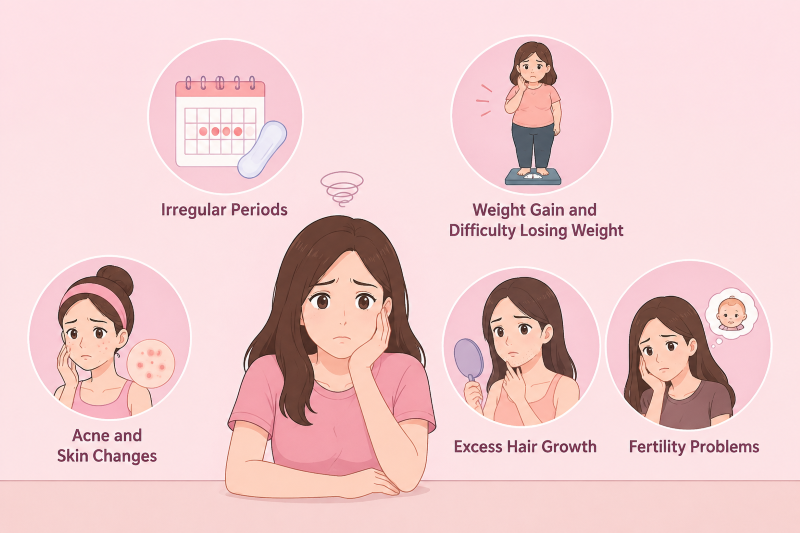
Irregular Periods
Irregular menstrual cycles are one of the most common signs.
You may notice:
- Periods occurring after long gaps
- Missed periods
- Heavy bleeding
- Unpredictable menstrual cycles
Irregular periods often happen due to problems with regular ovulation.
Weight Gain and Difficulty Losing Weight
Hormonal imbalance and insulin resistance can make weight management challenging for some women with PCOS.
Maintaining a balanced diet, exercising regularly, and improving sleep habits can support better hormone regulation.
Acne and Skin Changes
Higher androgen levels may increase oil production, leading to:
- Persistent acne
- Oily skin
- Dark patches on the neck or skin folds
Excess Hair Growth
Some women may experience increased hair growth on the face, chin, chest, or abdomen. This condition is known as hirsutism.
Fertility Problems
PCOD and PCOS can affect ovulation, which may make conception difficult for some women.
If you have irregular periods and are planning pregnancy, consulting a specialist early can improve your chances of receiving suitable treatment.
What Causes PCOD and PCOS?
The exact cause of PCOD and PCOS is not completely understood. Several factors may contribute to their development.
Hormonal Imbalance
In PCOS, increased androgen levels can interfere with normal egg development and ovulation.
Hormonal changes may also affect menstrual cycles and fertility.
Insulin Resistance
Insulin helps control blood sugar levels. When the body does not respond properly to insulin, it may produce higher insulin levels.
Increased insulin can stimulate the ovaries to produce more androgens, which may worsen PCOS symptoms.
Genetics
Women with a family history of PCOD or PCOS may have a higher chance of developing these conditions.
Lifestyle Factors
Certain lifestyle factors may contribute to symptom severity, including:
- Lack of physical activity
- High intake of processed foods
- Poor sleep patterns
- Chronic stress
How Are PCOD and PCOS Diagnosed?
Diagnosis involves understanding your symptoms, medical history, and test results.
A doctor may recommend:
Blood Tests
Blood tests help evaluate:
- Hormone levels
- Blood sugar levels
- Insulin levels
- Thyroid function
Ultrasound Examination
Pelvic ultrasound helps examine the ovaries and identify changes related to PCOS.
Having ovarian cysts alone does not confirm PCOS. Doctors consider symptoms, hormone levels, and other health factors before making a diagnosis.
PCOD Management and Treatment Options
Effective PCOD Management focuses on controlling symptoms, improving hormone balance, and preventing future health concerns.
Treatment depends on your symptoms, age, lifestyle, and whether you are planning pregnancy.
Lifestyle Changes
Healthy lifestyle habits play an important role in managing PCOD and PCOS.
Helpful steps include:
- Eating a balanced diet with adequate protein and fibre
- Exercising regularly
- Maintaining a healthy weight
- Managing stress
- Following a proper sleep routine
Even small lifestyle improvements can support better menstrual health.
Medicines
Doctors may prescribe medicines depending on your symptoms.
Treatment options may include:
- Medicines to regulate periods
- Hormonal medicines
- Medicines that improve insulin sensitivity
- Fertility medicines for women trying to conceive
Medicines should always be taken under medical supervision.
Choosing the Right Specialist for PCOD and PCOS Care
If you experience irregular periods, fertility concerns, or symptoms related to hormonal imbalance, consulting an experienced specialist can help you understand your condition better.
A qualified Gynecologist in Ravet can evaluate your symptoms, recommend appropriate tests, and guide you with personalised treatment options.
Specialists like Dr. Chaitali Adkar focus on understanding each patient’s hormonal health, concerns, and treatment goals before recommending a care plan.
PCOD and PCOS FAQs
No. PCOD mainly affects ovarian function, while PCOS is a hormonal disorder that can affect ovulation, metabolism, and fertility.
These conditions can be managed effectively with lifestyle changes, medicines, and regular medical care. Symptoms can improve with proper treatment.
Yes. Many women with PCOS can conceive naturally or with medical support to improve ovulation.
No. Not every woman with PCOS gains weight. Some women may have PCOS symptoms despite having a normal weight.
PCOD may affect ovulation in some women, which can impact fertility. Proper management can help improve reproductive health.
Conclusion
PCOD and PCOS are common hormonal conditions that can affect periods, fertility, skin health, and overall well-being. Understanding the difference between these conditions helps you identify symptoms early and seek appropriate care.
With proper diagnosis, lifestyle changes, and personalised treatment, many women successfully manage PCOD and PCOS. If you notice symptoms related to hormonal imbalance, consulting an experienced gynecologist can help you take the right steps toward better reproductive health.